

The building envelope is one of the most important—and often overlooked—elements of a commercial property. It’s the system that separates the interior of your building from the outside environment, protecting it from weather, moisture, air intrusion, and temperature extremes. When designed and constructed correctly, the building envelope plays a critical role in energy efficiency, occupant comfort, and long-term durability.
For property owners and facility managers, understanding the building envelope goes beyond construction terminology—it directly impacts operating costs, maintenance demands, and the lifespan of the building itself. From roofing and exterior walls to insulation, windows, an
Quick Answer: Why the Building Envelope Matters
Think of your building envelope as the skin of your facility. Just as human skin protects internal organs and regulates body temperature, your building envelope protects the structure and creates a controlled interior environment. When this system fails, you face rising utility bills, moisture problems, uncomfortable tenants, and expensive emergency repairs.
The stakes are high. Buildings consume more than 40% of energy in the United States. Air leakage alone can account for 20% of your total heating and cooling costs. For facilities managers overseeing large commercial properties, healthcare facilities, or educational campuses, understanding and maintaining your building envelope is not optional.
A poorly designed or maintained envelope leads to structural damage, mold growth, and operational headaches. A high-performance envelope delivers energy savings, occupant satisfaction, and peace of mind. The difference between the two often comes down to understanding what your building envelope does and how to keep it working properly.
The term "building envelope" might sound like industry jargon, but it’s a fundamental concept in construction and facilities management. At its core, the building envelope is the physical separator between a building's interior and the exterior environment. It's often referred to as the building enclosure, thermal envelope, or simply the building shell. This shell is responsible for creating and maintaining a distinct difference between the conditioned indoor space and the unconditioned outdoor elements. It’s a complex, multi-layered system where every component plays a vital role in protecting the structure and its occupants.
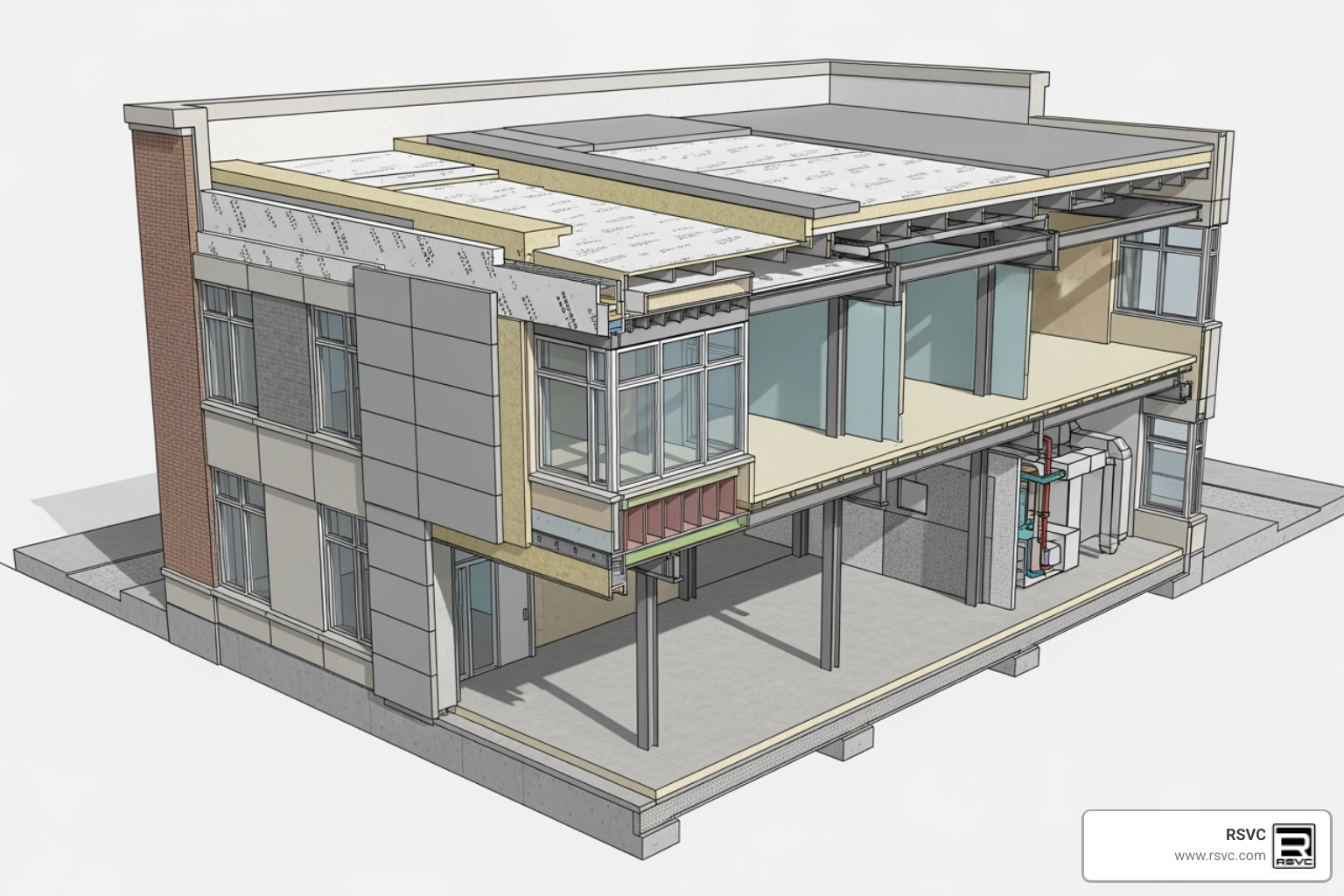
To truly understand the building envelope, we need to break it down into its essential parts. Each element, from the ground up, contributes to the overall performance of the system:
Foundation and Below-Grade Walls: The foundation is the bedrock of any structure, transmitting the building's loads to the ground. Below-grade walls, which are those parts of the foundation that are underground, are crucial for protecting the building from moisture intrusion and soil pressure.
Above-Grade Walls: These are the exterior walls we see every day. They are not simply a single layer but a multi-layered assembly designed for both structural support and environmental protection. A typical wall assembly might include exterior cladding, a weather barrier, exterior sheathing, insulation, structural components, and interior sheathing. These layers work together to minimize energy loss, resist wind and rain, and maintain durability.
Fenestrations (Windows, Doors, Skylights): These are the openings in the building envelope that allow natural light, ventilation, and access. While essential, they are also potential weak points for heat transfer, air leakage, and moisture intrusion if not properly designed and installed. High-performance windows and doors are vital for an energy-efficient building envelope.
Curtain Walls: Often seen in modern commercial buildings, curtain walls are non-structural outer coverings. Typically made of aluminum and glass, they act as a buffer and insulator, providing energy efficiency and contributing significantly to the building's aesthetic design.
Roof Systems: The roof is a primary line of defense against the elements. Its main functions include water protection, weather protection, insulation, and contributing to the building's longevity and aesthetics. The design and materials of the roof can significantly reduce cooling requirements in warmer climates, such as those found throughout California, by reflecting solar heat rather than absorbing it.
The interaction between all these components is what gives the building envelope its power. Individually, they are just materials; collectively, they form a sophisticated system with four fundamental functions:
Support (Structural Integrity, Load-Bearing): The building envelope supports, transfers, and accommodates structural loads imposed by the environment (like wind, snow, and seismic activity) and the building itself. It provides the necessary structural integrity to keep the building standing and safe.
Control (Thermal Barrier, Air Barrier, Moisture Management, Sound Insulation): This is arguably the most critical set of functions. The envelope blocks and regulates the flow of heat, air, moisture, and sound between the exterior and interior environments.
Finish (Aesthetics, Cladding, Interior Surfaces): The building envelope finishes the surfaces to meet aesthetic and other performance requirements. This includes the exterior cladding, which defines the building's curb appeal, as well as interior finishes that contribute to the indoor experience.
Distribute (Housing for Electrical and Plumbing Systems): The envelope can also distribute services and utilities. For instance, walls and floor systems often house electrical and plumbing systems that are integral to the building's operation.
Understanding the definition and components of the building envelope is just the beginning. Its true significance lies in its profound impact on a building's overall performance, directly influencing energy consumption, occupant health, structural durability, and long-term operating costs. This is a Key Infrastructure Decisions That Affect Your Facility's Longevity.
A high-performance building envelope is a cornerstone of energy efficiency. It acts as the primary thermal barrier, dictating how much energy is required to heat and cool a building.

We know that building envelopes account for a substantial portion of a building's energy use. Statistics show that building envelopes are responsible for about 30% of heating and cooling energy use in commercial buildings. This means that nearly one-third of the primary energy consumed in residential and commercial buildings is directly tied to how well the envelope performs.
When an envelope is poorly designed or constructed, it allows unwanted heat transfer. In California's diverse climate, this means warm air can easily infiltrate during hot summers, and conditioned cool air can escape, forcing HVAC systems to work harder. Conversely, in cooler periods, heat can escape, leading to increased heating demands.
Air leakage is another significant culprit. Studies indicate that air leakage in commercial buildings can account for about 20% of the total energy used to heat and cool them. These leaks, often small and invisible, cumulatively act like leaving a window open all year, constantly battling your HVAC system. Effective air barrier solutions—such as sealants, membranes, spray foams, and sheathings—are key to addressing this issue.
Beyond energy savings, a well-designed building envelope profoundly impacts the indoor environment, affecting occupant comfort, health, and even the acoustic quality of a space.
Indoor Comfort: A high-performance envelope minimizes drafts and reduces temperature fluctuations, creating more consistent and comfortable temperatures throughout the building. It also helps regulate indoor humidity, which is crucial for comfort, especially in California's varied climates.
Indoor Air Quality (IAQ): The building envelope acts as a critical barrier against external pollutants, allergens, and pests. By controlling air infiltration, it prevents outdoor contaminants from entering the building. This is vital in protecting occupants from respiratory issues. Furthermore, by preventing moisture intrusion, it significantly reduces the risk of mold growth, which can severely compromise IAQ and occupant health. Clean Air Certified structures are becoming increasingly important as we prioritize healthy indoor environments.
Sound Insulation: A robust building envelope insulates against external sounds, such as traffic noise or industrial activity. This acoustic performance is essential for creating productive and peaceful indoor environments, whether in a commercial office, a school, or a healthcare facility.
The implications of a poorly designed or maintained building envelope can be severe and far-reaching, impacting both the immediate operational costs and the long-term viability of a property.
Here are some common consequences:
Achieving a high-performance building envelope requires careful planning, expert design, quality construction, and diligent maintenance. It’s a holistic approach that considers every aspect of the building's interaction with its environment, aiming for long-term resilience and sustainability. Incorporating Sustainable Practices in Your Commercial Renovation is a key part of this.
When designing and constructing a building envelope, we adhere to several best practices to ensure optimal performance:
California's diverse climate zones present unique challenges and opportunities for building envelope design. What works in the hot, arid Inland Empire may not be ideal for the cool, moist Southern California coast.
Hot/Arid Climates (e.g., Irvine, Palm Springs, or the Central Valley): In these regions, mitigating solar heat gain is paramount. Strategies include:
Coastal Climates (e.g., Los Angeles, San Diego, or San Francisco Bay Area): These areas experience higher humidity, fog, and sometimes strong winds. Key considerations include:
Understanding these climatic differences allows us to tailor building envelope solutions that are not only energy-efficient but also durable and resilient to local environmental conditions.
Compliance with building codes and energy performance standards is not just a legal requirement; it's a foundation for a high-performance building envelope. In California, we steer a comprehensive set of regulations:
Adhering to these codes ensures that our projects meet minimum safety and energy performance standards, contributing to the long-term viability and sustainability of the structures we build and manage.
We often encounter common questions about the building envelope, its characteristics, and its implications. Let’s address some of these.
The distinction between a 'tight' and a 'loose' building envelope primarily refers to the degree of air leakage and control over indoor air quality and energy consumption.
Tight Building Envelope: A tight envelope allows very few uncontrolled air leaks. This is achieved through meticulous air sealing, continuous insulation, and high-performance fenestrations.
Loose Building Envelope: A loose envelope has numerous uncontrolled air leaks. This is common in older buildings not designed with modern energy efficiency standards in mind.
In modern, high-performance construction, the goal is always a tight building envelope paired with controlled mechanical ventilation for optimal energy efficiency and indoor comfort.
Even with the best intentions, building envelopes can fail due to various factors. Identifying common failure points is crucial for effective design, construction, and maintenance:
Regular inspections and maintenance are key to identifying and addressing these vulnerabilities before they escalate into costly problems.
The building envelope plays a significant, though often underestimated, role in determining a building's resale value and marketability. A high-performance envelope contributes to value in several ways:
Investing in a high-performance building envelope is not just about immediate savings; it's about safeguarding and enhancing the long-term value of your property.
At RSVC, we understand that optimizing your building envelope is a critical investment in your facility's future. Our commitment to customer-centric solutions, operational efficiency, and sustainable practices means we prioritize high-quality construction and maintenance that delivers lasting value. We leverage technology and attract top talent to ensure that our eco-friendly construction and maintenance processes result in superior building performance.
At RSVC, we know every building is unique. We take a personalized approach, starting with energy audits and guiding you through implementation. Our expert team delivers solutions for your specific needs, building partnerships and creating lasting value. The journey to energy efficiency can seem complex, but you don't have to go it alone. Whether retrofitting or building new, we help you make informed decisions that align with your goals. Let's transform your properties into high-performing assets.
Ready to take the next step? Let's start a conversation about how energy-efficient systems can work for your California property.


