Why Modern Commercial Spaces Are Turning to Raised Access Flooring
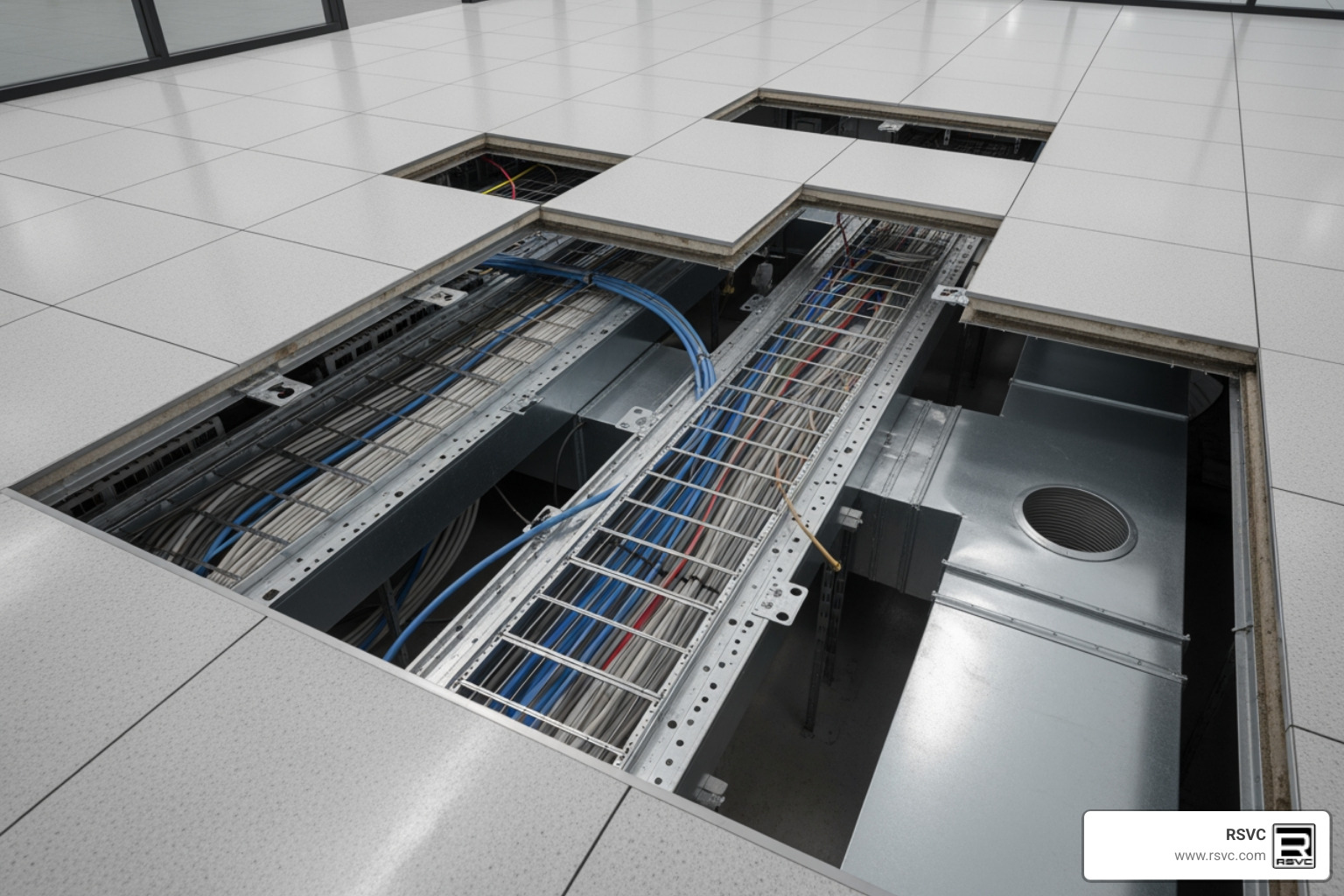
In modern commercial spaces, flexibility isn’t a nice-to-have—it’s a competitive advantage. Raised access floors provide a smart, future-ready foundation by creating an elevated platform that houses power, data, and HVAC components beneath the surface. This design allows businesses to adapt quickly to changing technology needs without disruptive construction, making raised access floors especially valuable in offices, data centers, healthcare facilities, and other high-performance environments.
Beyond adaptability, raised access floors deliver tangible operational and financial benefits. They simplify maintenance, improve airflow and energy efficiency, and support cleaner, more organized workspaces by eliminating cable clutter. Over time, this translates into reduced downtime, lower retrofit costs, and spaces that can evolve as fast as the organizations that occupy them—protecting both productivity and long-term investment.
Quick Answer: What Can Raised Access Flooring Do?
- Hide Infrastructure: Conceals wiring, data cables, and mechanical systems in an accessible underfloor void.
- Enable Flexibility: Allows easy reconfiguration of power and data outlets without major construction.
- Improve Efficiency: Reduces cooling costs by up to 40% with underfloor air distribution in data centers.
- Improve Safety: Eliminates trip hazards from exposed cables for a cleaner, safer space.
- Support Growth: Accommodates new technology and layout changes as your business evolves.
Modern businesses rely on complex networks of data and power. Managing this infrastructure without compromising design or safety is a major challenge, especially as over 40% of commercial spaces are redesigned annually.
Raised access flooring offers a practical solution. Instead of cutting into walls or using unsightly cable trays, this system creates an organized, accessible space beneath the floor. This results in a clean aesthetic with all critical services neatly housed below.
For facilities managers in California, this means reduced downtime during reconfigurations, lower long-term maintenance costs, and the flexibility to adapt. Whether for a tech campus in San Francisco, a healthcare facility in Los Angeles, or a corporate office in San Diego, this system can transform how your building supports your operations.
Understanding the Fundamentals of Raised Access Flooring
Raised access flooring is a building system designed to create a concealed, functional space between a structural floor and the finished walking surface. By elevating modular floor panels on a grid of pedestals, this system allows power, data, and air distribution to run efficiently beneath the floor. Understanding the fundamentals of raised access flooring helps building owners, designers, and facility managers make informed decisions that improve flexibility, simplify maintenance, and support long-term performance as space and technology needs evolve.
Primary Components: The Building Blocks of Your Floor
Every raised access flooring system is an engineered assembly of key elements working together to provide a robust, flexible platform.
- Floor Panels: These are the horizontal, load-bearing surfaces you walk on. Typically 24x24 inches in the US, these modular panels are easily removable for quick access to the underfloor void.
- Panel Core Materials: The panel's core determines its strength and performance.
- Steel-Encased Woodcore: A popular choice offering a good balance of strength, fire performance, and acoustics.
- Steel/Cementitious: A welded steel shell with a cement-based core, known for excellent structural integrity and fire resistance.
- Aluminum: Lightweight, non-magnetic, and corrosion-resistant, often used in clean rooms.
- Fiberglass Reinforced Magnesium Oxide (MgO): A durable, lightweight, and innovative option for some low-profile systems.
- Adjustable Pedestals: These vertical steel supports lift the floor panels. They are height-adjustable to create a level floor over an uneven subfloor and are bonded with an epoxy-based adhesive for stability.
- Stringers: These horizontal components connect pedestal heads, forming a grid that provides lateral stability and improves structural performance. They are crucial for taller floor heights (often over 24 inches).
- Gaskets: Placed on stringers or pedestal heads, gaskets absorb impact, prevent rattling, and help seal the plenum for efficient air distribution.
Types of Raised Access Flooring Systems
We recognize two primary categories, each designed for different functional and aesthetic requirements.
| Feature | Traditional (Post & Panel) System | Low-Profile (Cable Management) System |
|---|
| Height Range | 6 inches (152 mm) to 4 feet (1.3 m), or higher | 1.6 to 2.75 inches (41 to 70 mm) |
| Primary Use | Extensive cable management, underfloor air distribution (UFAD) | Primarily cable management, light services |
| Plenum Capability | Creates a significant plenum for air and services | Limited or no plenum for air distribution; focus on cable routing |
| Components | Panels, adjustable pedestals, stringers | Panels, often integrated pedestals, sometimes modular grids |
| Flexibility | High flexibility for service routing and HVAC | Good flexibility for cable routing, less for large HVAC |
- Traditional Systems (Post and Panel): First introduced in the 1960s, these systems create a substantial void (6 inches to 4+ feet) ideal for extensive cabling, plumbing, and fire suppression systems.
- Underfloor Air Distribution (UFAD): A key advantage is their ability to incorporate UFAD. The void acts as a sealed plenum, delivering conditioned air through floor panels to improve air quality and energy efficiency.
- Plenum Space: This sealed air space is a highly organized compartment for all building services, making maintenance and reconfigurations efficient.
- Low-Profile Systems (Cable Management): With a minimal height (1.6 to 2.75 inches), these systems are effective for managing data and electrical cabling in modern offices. They eliminate exposed cables and provide an accessible channel for wiring, creating an adaptable foundation for connected infrastructure.
No matter the type, our goal at RSVC is to help you select and implement the raised access flooring solution that perfectly aligns with your operational needs and design vision.
The Strategic Advantages for California Businesses
In California's competitive business environment, raised access flooring offers compelling benefits that impact operational efficiency, cost management, and adaptability. These systems are increasingly adopted in data centers, tech hubs, and modern offices across the state.
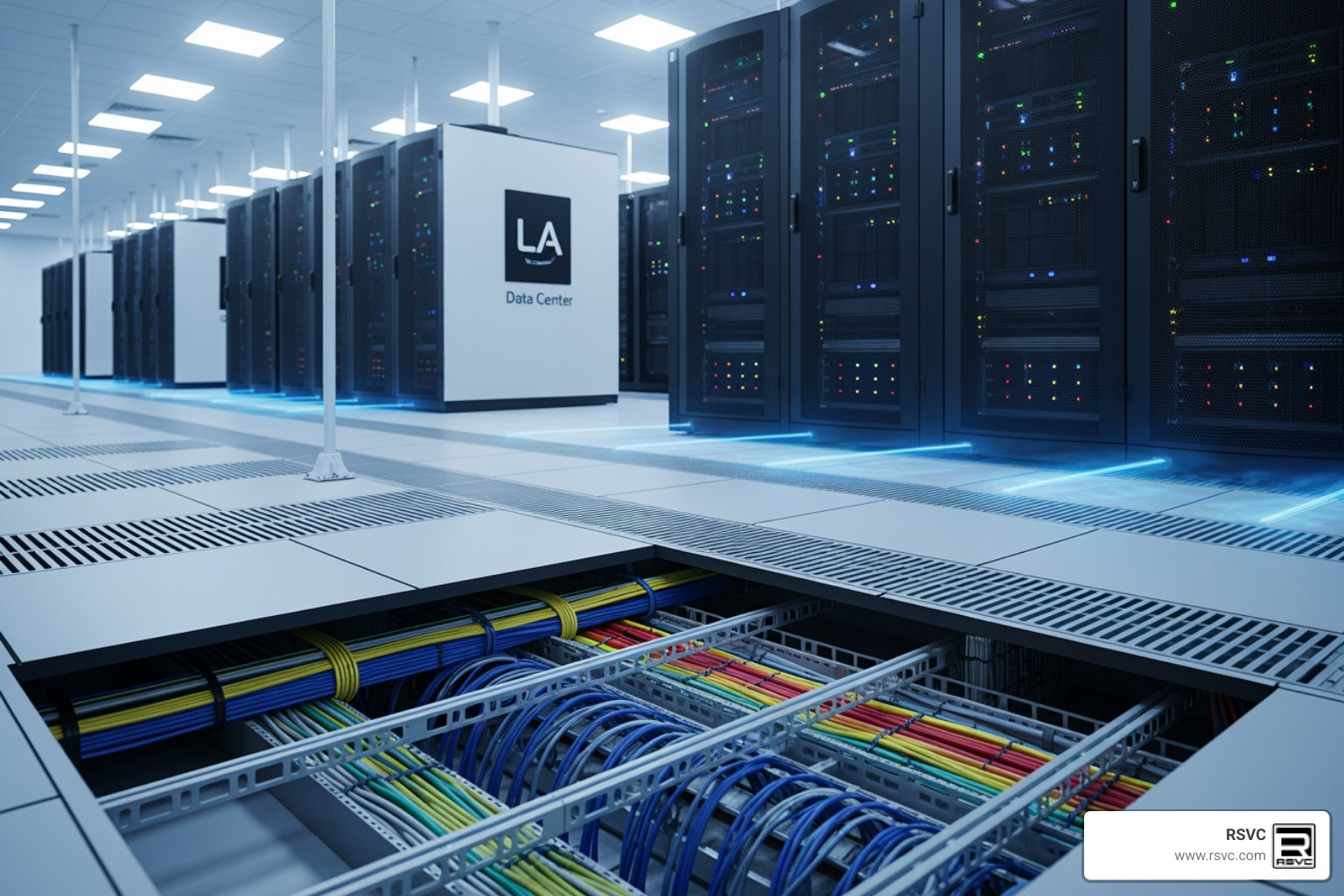
Best Flexibility and Future-Proofing
One of the most significant advantages of raised access flooring is the flexibility it brings to a commercial space. Unlike traditional flooring systems, raised floor panels can be lifted to provide immediate access to power, data, and HVAC infrastructure. This makes reconfiguring office layouts, relocating workstations, or upgrading technology faster and far less disruptive—an important benefit for businesses that need to stay agile.
Raised access flooring also helps future-proof a building. As technology evolves and new wiring or fiber optic systems are required, infrastructure can be added or modified without invasive construction. These underfloor adjustments are completed efficiently, reducing downtime and minimizing interruptions to daily operations. The system also supports ongoing “office churn,” allowing frequent layout changes to occur seamlessly without costly remodels. As a core infrastructure decision, raised access flooring extends the functional lifespan of a facility and ensures the space can adapt for decades to come.
Improved Energy Efficiency and Sustainability
Raised access flooring can play a meaningful role in improving a building’s energy efficiency and supporting sustainability goals, particularly in energy-conscious markets like California. By creating space beneath the floor for air distribution and mechanical systems, this flooring approach enables more efficient environmental control than traditional designs.
One of the biggest advantages is its compatibility with underfloor air distribution (UFAD) systems. UFAD delivers conditioned air from below, allowing it to rise naturally and create more consistent temperatures while using less energy than overhead HVAC systems. This approach can significantly reduce cooling demands, especially in environments with high heat loads. In data centers and technology-heavy facilities, raised access flooring has been shown to cut cooling energy use by as much as 40%. In addition, integrating raised access flooring with UFAD can support LEED certification and other green building initiatives, helping lower long-term operating costs while aligning with sustainable construction practices.
Superior Cable Management and Safety
Raised access flooring creates a safer, more professional, and easier-to-maintain environment.
- Concealed Electrical and Data Wiring: All power, data, and telecom cables are housed in the underfloor void, eliminating unsightly trays or conduits for a clean aesthetic and simplifying commercial construction electrical planning.
- Eliminates Trip Hazards: Hiding cables beneath the floor drastically improves safety by removing significant tripping hazards, reducing the risk of accidents and potential liability.
- Clean Aesthetics and Professional Appearance: A clutter-free environment promotes a sense of order and professionalism, which is invaluable for businesses aiming for a high-end image.
- Easy Access for Maintenance: Technicians can quickly lift panels to access, diagnose, and fix issues, which is far more efficient than tracing wires through walls or ceilings.
For businesses in California, where innovation and design go hand-in-hand, raised access flooring provides a practical foundation for success.
Specifying Your System: Technical and Design Considerations
Choosing the right raised access flooring system requires a careful evaluation of technical specifications to ensure it can withstand intended loads, meet safety standards, and integrate with your building's design. We work closely with our clients to steer these critical decisions.
Choosing the Right Structural Grade and Height
The performance of your floor hinges on its structural capacity and the height of the underfloor void.
- Structural Grades: Panels are categorized by their load-bearing capacity:
- Light Grade: For general offices with light foot traffic.
- Medium Grade: For areas with heavier foot traffic and equipment, like corridors.
- Heavy Grade: For data centers and control rooms with heavy IT equipment.
- Extra-Heavy Grade: For specialized areas with extremely heavy equipment, like server farms.Matching the grade to your needs is crucial to prevent structural problems. For more on structural considerations, see our insights on concrete construction.
- Load Capacity (Point Loads vs. Uniformly Distributed Loads - UDL): We consider two load types:
- Point Load: Weight concentrated on a small area (e.g., a server rack leg).
- Uniformly Distributed Load (UDL): Weight spread evenly across a larger area.Industry standards specify minimum load capacities, often with a safety factor of 3x.
- Finished Floor Height (FFH): The height from the subfloor to the panel surface is a critical decision influenced by:
- Volume of Services: More cables and ducts require a higher void.
- Airflow Requirements: UFAD systems may need a larger plenum for optimal airflow.
- Building Regulations: California codes may have specific height requirements.
- Available Headroom: The impact on overall ceiling height must be considered. Traditional systems range from 6 inches to 4+ feet, while low-profile systems are typically 1.6 to 2.75 inches.
Finishes, Seismic Safety, and Industry Standards
Once structural needs are set, we focus on aesthetics and crucial safety measures for our California projects.
- Floor Finish Options: Panels can be supplied bare for on-site finishing or with factory-applied options:
- Laminate and Vinyl: Durable and cost-effective in many designs.
- Carpet Tiles: Great for acoustics and easily replaceable in offices.
- Wood, Stone, Marble, and Terrazzo: Premium finishes for a high-end aesthetic.The choice of finish impacts both the look and acoustic performance.
- Seismic Bracing Requirements: In California, seismic bracing is a necessity. We ensure your system has robust reinforcement, like heavy-duty supports and diagonal braces, to prevent collapse during an earthquake. These measures are vital for protecting your infrastructure and occupants. Our expertise in California building codes to consider in commercial construction ensures full compliance.
- Industry Standards and Specifications: Adherence to standards is paramount. In the US, especially for data centers, we refer to:
- Telcordia GR-2930 (NEBS Requirements): Provides detailed specifications for raised flooring in network and data centers.
- CSI MasterFormat: Category 09 69 00 guides architects and contractors.We ensure the selected system meets or exceeds all relevant standards. For more detailed information, we recommend referring to specific guides on the selection and installation of raised floors.
Installation, Lifespan, and Potential Issues
Implementing raised access flooring is a significant project. Understanding the installation, lifespan, and potential challenges is key to a successful outcome for our clients across California.
The Installation and Maintenance Process
A well-installed system is a testament to careful planning and skilled execution.
- Subfloor Preparation: The process begins with a prepared subfloor. The concrete slab must be clean, dry, and level to provide a stable base for the pedestals.
- Pedestal Installation: Technicians precisely position and bond adjustable pedestals to the subfloor with a strong adhesive. Each pedestal is leveled to create a flat plane. For taller systems, stringers are attached to form a robust grid.
- Panel Laying: Floor panels are laid into the completed grid. Panels may rest on the stringers or be screwed down for added security. This process is a crucial building construction milestone.
- Using Panel Lifters: Specialized panel lifters (or suction lifters) allow for easy removal of individual panels for maintenance or cable routing.
- Maintenance Schedule: Regular maintenance, including cleaning and checking for loose panels, is important to preserve the system's integrity.
- Lifespan: A high-quality, professionally installed system can last for decades. Many manufacturers offer 25-year warranties, with some components lasting up to 50 years, making it an excellent long-term investment.
Understanding the Drawbacks and How to Mitigate Them
While the benefits are substantial, it's important to understand potential drawbacks and how to address them.
- Initial Cost: The cost of raised access flooring can range from $20-$40 per square foot installed. This upfront investment is often offset by long-term savings in maintenance, flexibility, and energy efficiency.
- Reduced Ceiling Height: An liftd floor inherently reduces the available floor-to-ceiling height. This is a critical consideration during the design phase to ensure the space remains comfortable and functional.
- Underfloor Fire Protection: The underfloor void can pose unique fire safety challenges. Depending on building codes, specific underfloor fire suppression systems or fire-rated components may be required. We ensure all installations comply with California's fire safety regulations.
- Zinc Whiskers Phenomenon: A concern in older data centers, these microscopic metallic filaments can grow from zinc-plated surfaces and cause short circuits in electronic equipment if they become airborne.
- NASA Research: NASA has conducted extensive research on this phenomenon due to the risk to sensitive electronics.
- Mitigation: Modern systems use alternative materials or coatings to prevent whisker formation. Proper cleaning and airflow also help mitigate risks.
- Proper Grounding: In environments with sensitive electronics, proper grounding of the floor system is essential to prevent static buildup and protect equipment. We prioritize meticulous grounding in all our installations.
By understanding these considerations, we can design and implement a raised access flooring solution that maximizes benefits while proactively addressing any potential challenges.
Frequently Asked Questions about Raised Access Flooring
We often get asked great questions about raised access flooring. Here are some of the most common inquiries from businesses in California:
Can raised flooring be used in any commercial building?
While versatile, its suitability depends on the building's specific needs.
- Ideal Applications: It is especially beneficial for:
- Data Centers and Telecom Facilities: Essential for managing massive cabling and distributing cool air efficiently, reducing cooling load by up to 40%. Telcordia GR-2930 outlines requirements for these environments.
- Modern Office Buildings: Allows for flexible layouts and clean aesthetics in tech companies and corporate offices.
- Command Centers and Control Rooms: Ideal for spaces where technology is constantly updated.
- Educational and Retail Spaces: Useful for computer labs and flexible retail displays.These are some of the 5 common types of commercial buildings that benefit greatly.
- New Construction vs. Remodel: It can be integrated into both new commercial builds and remodel commercial building projects, often simplifying infrastructure upgrades in remodels.
- Structural Considerations: The building's existing structure must be assessed to ensure it can support the added weight of the system and its equipment.
Is a raised floor noisy to walk on?
A properly specified and installed system should not be excessively noisy. The acoustic performance is influenced by:
- Panel Core Material Impact: Denser cores (cementitious or high-density woodcore) offer better sound dampening.
- Installation Quality: Securely bonded pedestals and tightly fitted panels prevent rattling and creaking.
- Gasket Importance: Gaskets on pedestals or stringers absorb impact and prevent metal-on-metal noise.
- Sound Dampening Options: Some systems include additional sound-absorbing materials.
We prioritize quality installation and material selection to ensure your raised access flooring is as quiet and solid as traditional flooring.
Why Choose RSVC Construction?
Raised access flooring is more than just a surface to walk on; it's a strategic infrastructure investment that provides unparalleled flexibility, safety, and efficiency for modern businesses. By creating an organized and accessible space for your building's critical systems, you can easily adapt to technological changes, reduce long-term operational costs, and maintain a clean, professional environment. For businesses in California looking to build or remodel, incorporating this system is a forward-thinking decision that pays dividends for years to come.
RSVC Construction partners with commercial clients and project managers who value financial clarity and disciplined project execution. By applying proven cost control practices and leveraging experienced leadership, RSVC Construction helps ensure that construction investments are managed responsibly from preconstruction through closeout. To learn how a focused, professional approach to cost tracking can support your next commercial project, connect with RSVC Construction and start building with confidence and control.
At RSVC, we know every building is unique. We take a personalized approach, starting with energy audits and guiding you through implementation. Our expert team delivers solutions for your specific needs, building partnerships and creating lasting value. The journey to energy efficiency can seem complex, but you don't have to go it alone. Whether retrofitting or building new, we help you make informed decisions that align with your goals. Let's transform your properties into high-performing assets.
Ready to take the next step? Let's start a conversation about how energy-efficient systems can work for your California property.
Start your energy-efficient construction project today.


