


The modern grocery store is no longer designed solely for in-aisle shoppers. At RSVC Construction, we understand that e-commerce, curbside pickup, and rapid fulfillment have permanently reshaped how consumers interact with food retail. What began as a convenience feature has become a core revenue channel, requiring stores to function simultaneously as retail environments, distribution hubs, and logistics centers. Future-proofing grocery stores for these demands is no longer optional—it is a strategic necessity for operators seeking to remain competitive in an increasingly hybrid marketplace.
At RSVC Construction, we help grocery operators design and build facilities that are prepared for evolving fulfillment needs. This goes beyond adding a few curbside parking spaces. It requires intentional planning for traffic flow, dedicated staging areas, cold storage integration, efficient employee workflows, and advanced technology infrastructure. By aligning construction strategy with omnichannel operations, RSVC Construction ensures that grocery stores are not only operationally efficient today but adaptable to meet the demands of tomorrow’s retail environment.
Here's a quick overview of what it takes:
The grocery industry is changing fast. Online grocery sales in the US were just 3% of total sales in 2019. By 2021, that number had tripled to 10%. Today, the US online grocery market is on track to generate $257 billion in revenue, and experts expect online sales to make up more than 20% of the total US market by 2026.
Shoppers across California now expect to order groceries from their phone and pick them up in minutes — or have them delivered the same day. And the stakes are high. Shoppers who use both online and in-store channels spend up to four times more than those who only shop in-store.
For operations and facilities managers, this shift creates real pressure. Stores need new layouts, new technology, and new workflows — without shutting down daily operations. The good news is that the right upgrades don't have to mean a full rebuild. Smart, phased investments in the right areas can bring your store up to speed.
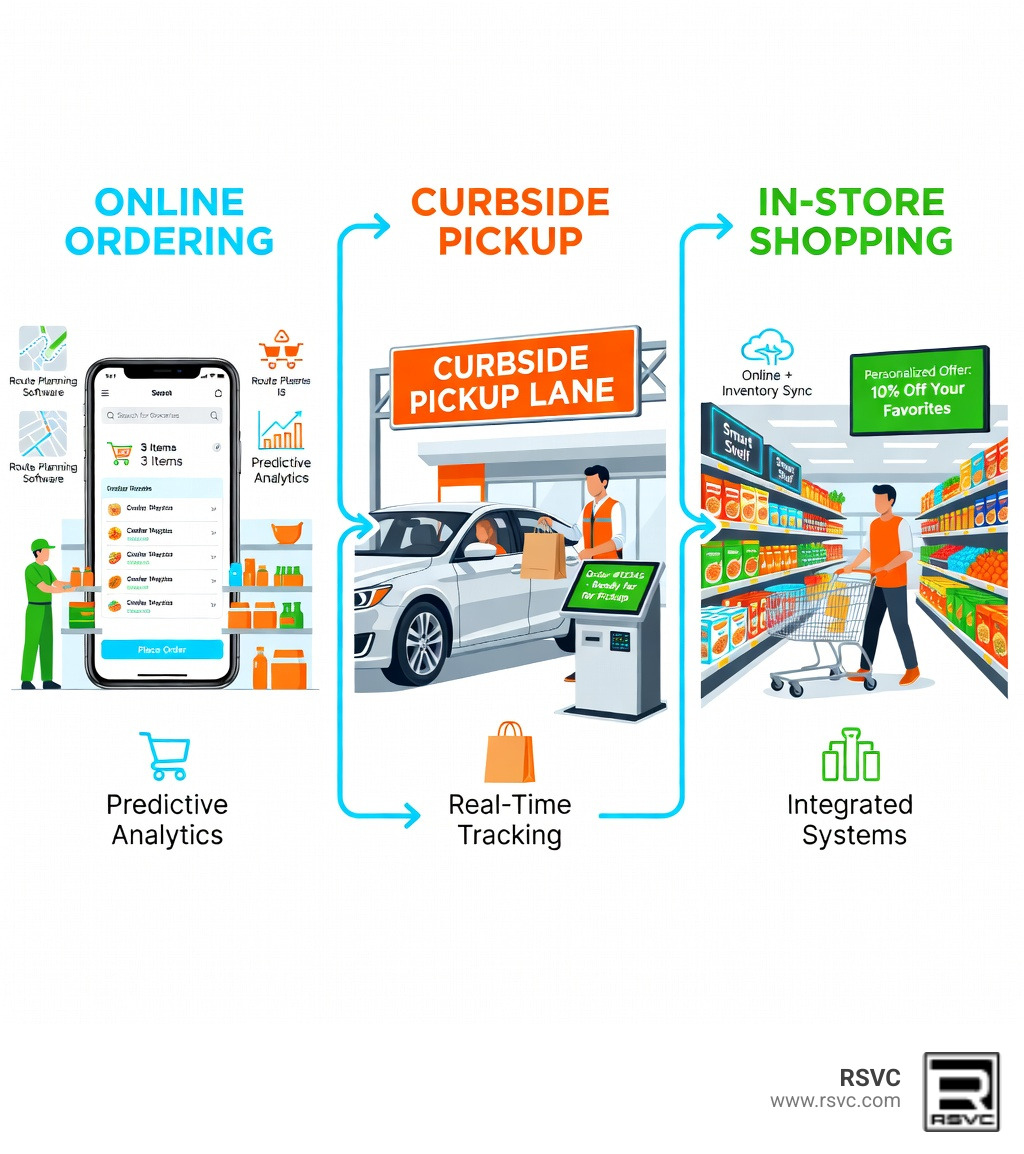
The way we buy food has undergone a radical transformation. Historically, The rise of the supermarket was built on the idea of self-service—shoppers walking the aisles, selecting their own produce, and hauling it home. But the "digital shelf" has changed the game.
Consumer expectations have shifted toward a "need it now" mentality. More than 25% of online grocery shoppers are now willing to pay extra for faster delivery options. Whether it’s a parent in San Luis Obispo needing diapers in 30 minutes or a busy professional in Los Angeles ordering dinner ingredients during their commute, speed and convenience are the new currencies of retail.
| Feature | In-Store Only Shopper | Omnichannel Shopper |
|---|---|---|
| Annual Spend | Baseline | Up to 4x higher |
| Loyalty | Driven by location | Driven by convenience & personalization |
| Fulfillment Choice | Limited to checkout lane | Pickup, Delivery, or Scan-and-Go |
| Tech Usage | Low | High (Apps, Real-time tracking) |
When we talk about future-proofing grocery stores, we aren't just talking about a fancy website. We're talking about the physical "bones" of the store. A store built in 1995 wasn't designed for a fleet of gig workers or store associates clogging the aisles with massive picking carts.
To adapt, we must look at Grocery Store Construction & Maintenance through a new lens. Infrastructure requirements now include:
Technology is the nervous system of modern fulfillment. Without it, you’re just guessing. To stay competitive, grocers must move beyond basic spreadsheets and adopt integrated tools:
Interestingly, we’re seeing that Mobile Checkout Gains Momentum in Europe and other global markets, providing a blueprint for how we can reduce friction in the physical store while supporting online growth.
The physical layout of a store can either be a bottleneck or a catalyst for growth. As we manage grocery projects, we focus on several key infrastructure elements:
As volume grows, picking from the store floor becomes unsustainable. This is where Micro-Fulfillment Centers (MFCs) and nano-warehouses come in. These are compact, highly automated "stores within a store" or small nearby hubs.
One of the most exciting innovations is the Alphabot system, a proprietary storage and retrieval system used by some of the world's largest retailers. Alphabot uses autonomous carts to retrieve ambient, refrigerated, and frozen items from a high-density warehouse space and bring them directly to a human picker.
Other models include:
These systems are designed to maximize productivity. For example, a 350,000-square-foot automated hub can process upwards of 18,000 orders a day using over 1,000 robots. While that scale might be for the giants, the technology is trickling down to modular systems that fit into the back of a standard supermarket in California.
At RSVC Construction, we recognize that the in-store experience remains a critical component of a grocery store’s success, even as digital channels grow. Thoughtful construction and design can seamlessly integrate omnichannel capabilities—such as click-and-collect stations, dedicated pickup zones, and streamlined fulfillment pathways—without disrupting the shopping environment. By strategically planning space layouts, traffic flow, and customer touchpoints, RSVC Construction helps grocery operators create stores that feel welcoming and intuitive for in-person shoppers while efficiently supporting online order fulfillment. This integration enhances convenience, reduces operational friction, and strengthens overall customer satisfaction, positioning stores for long-term success in a hybrid retail landscape.
This flexibility allows grocers to:
The "last yard" of fulfillment—getting the groceries from the store to the car trunk—is often the hardest. Core challenges include:
Independent grocers often worry they can't compete with the tech budgets of national chains. Composable commerce levels the playing field. Because it is modular, grocers can start small—perhaps just with a mobile app—and add features over time. It prevents "vendor lock-in" and allows for flexible integration with existing POS systems. This "future-proofs" the business by allowing it to adapt to new trends without needing a massive infrastructure rebuild every five years.
Investing in mobile self-scanning isn't just about being "high-tech." The ROI comes from several areas:
At RSVC, we understand that renovating your grocery store is a journey, not a destination. Whether you are operating in Southern California or across the state, the pressure to evolve is real. But with change comes opportunity.
By focusing on operational excellence, digital innovation, and strategic partnerships, grocers can transform their physical stores into high-efficiency fulfillment hubs. We are committed to helping our partners navigate this transition through sustainable practices, eco-friendly construction, and a deep focus on customer-centric solutions.
Operational excellence is at the core of our business philosophy. We strive to perform with quality, speed, and reliability in all our projects. This focus on excellence helps us achieve the goals of our customers, ensuring that their stores operate smoothly and efficiently. From routine equipment upkeep to implementing cutting-edge technology, our team is equipped to handle all aspects of grocery store construction maintenance.
Our strategic partnerships and investment in digital innovation allow us to offer advanced solutions like predictive maintenance and automation tools. These technologies not only streamline operations but also improve the overall shopping experience for customers by minimizing downtime and ensuring a well-maintained environment.
Moreover, our dedication to sustainability means we incorporate eco-friendly practices in our construction and maintenance processes. This not only reduces the environmental impact but also aligns with the growing demand for sustainable business practices.
RSVC is more than just a service provider; we are a trusted partner in the grocery industry. Our focus on customer satisfaction, operational efficiency, and sustainable practices positions us as a leader in grocery store construction and maintenance. To learn more about how we can help your grocery business thrive, visit our Grocery Services page.


